
Designing Community Experiences Through Planning and Landscape Architecture
A successful community is more than a plan on paper. It is an experience shaped by how people arrive, move, gather, connect, and interact with the landscape around them.
In master planned communities, that experience does not happen by accident. It is created through a clear planning framework, thoughtful landscape architecture, connected open spaces, and design decisions that make the community feel intuitive, welcoming, and grounded in its identity.
When planning and design work together from the beginning, streets, parks, trails, homes, and gathering spaces become part of one connected experience. The result is a community that feels easier to navigate, more comfortable to explore, and more meaningful to the people who live there.
Community Planning Begins With Experience
A strong community framework does more than organize land uses. It tells the story of how people will experience a place every day.
That framework shapes:
How residents and visitors arrive
How people move through the community
Where gathering spaces are located
How parks, trails, streets, and homes connect
How outdoor spaces become part of daily life
How the character of the land is expressed through design
When these elements are planned together, the community becomes more than a collection of individual features. It becomes a connected environment where each space supports the next.
The Importance of Arrival in Community Design
Arrival is one of the first and most important moments in the community experience.
It creates an emotional impression before a resident or visitor reaches a home, park, amenity, or trail. Through landscape, architecture, streetscape design, signage, grading, and views, arrival communicates the identity and values of a community.
A well-designed arrival sequence can make a place feel welcoming, vibrant, calming, elevated, connected, or deeply rooted in its surroundings.
It also helps establish a sense of anticipation. When arrival is thoughtfully designed, people understand that they are entering somewhere distinct and meaningful.
Movement Shapes How People Understand a Community
After arrival, movement becomes the next layer of experience.
Pathways, trails, streets, sidewalks, paseos, and open space connections all influence how people move through a community. These systems affect comfort, confidence, walkability, and everyday use.
When routes are clear, shaded, safe, and connected, people are more likely to walk, explore, and spend time outside. Movement becomes natural rather than forced. Residents understand where to go and how different parts of the community relate to one another.
This is especially important in master planned communities, where the scale of the site can make connectivity challenging. A strong planning and landscape framework helps organize that complexity and creates a more seamless experience from neighborhood to neighborhood.
Outdoor Spaces as Part of Daily Life
Parks and open spaces are most successful when they are woven into the routines of the community.
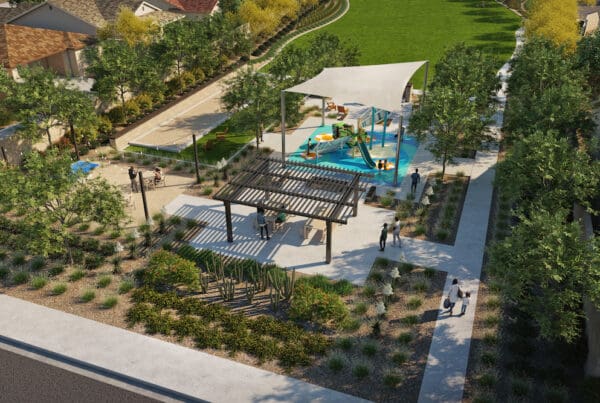
Rather than functioning as isolated amenities, outdoor spaces should be connected to the places people already move through every day. Shaded gathering areas, trails, park edges, flexible lawns, seating areas, and landscape corridors all contribute to how residents use and enjoy their community.
When these spaces are easy to reach and naturally integrated into daily movement patterns, they become part of everyday life. They support connection, recreation, wellness, and a stronger relationship between residents and the place they call home.
Why Transitions Matter in Community Design
The spaces between destinations are just as important as the destinations themselves.
Tree-lined walkways, landscaped entry corridors, changes in paving, layered planting, trail connections, park edges, and streetscape details help tie the community together. These transitions create flow between homes, streets, parks, trails, and gathering spaces.
When designed thoughtfully, transitions make movement feel seamless. They also help reinforce the overall identity of the community, ensuring that every part of the project feels connected to the larger experience.

Planning in Practice: Northpointe at Vistancia
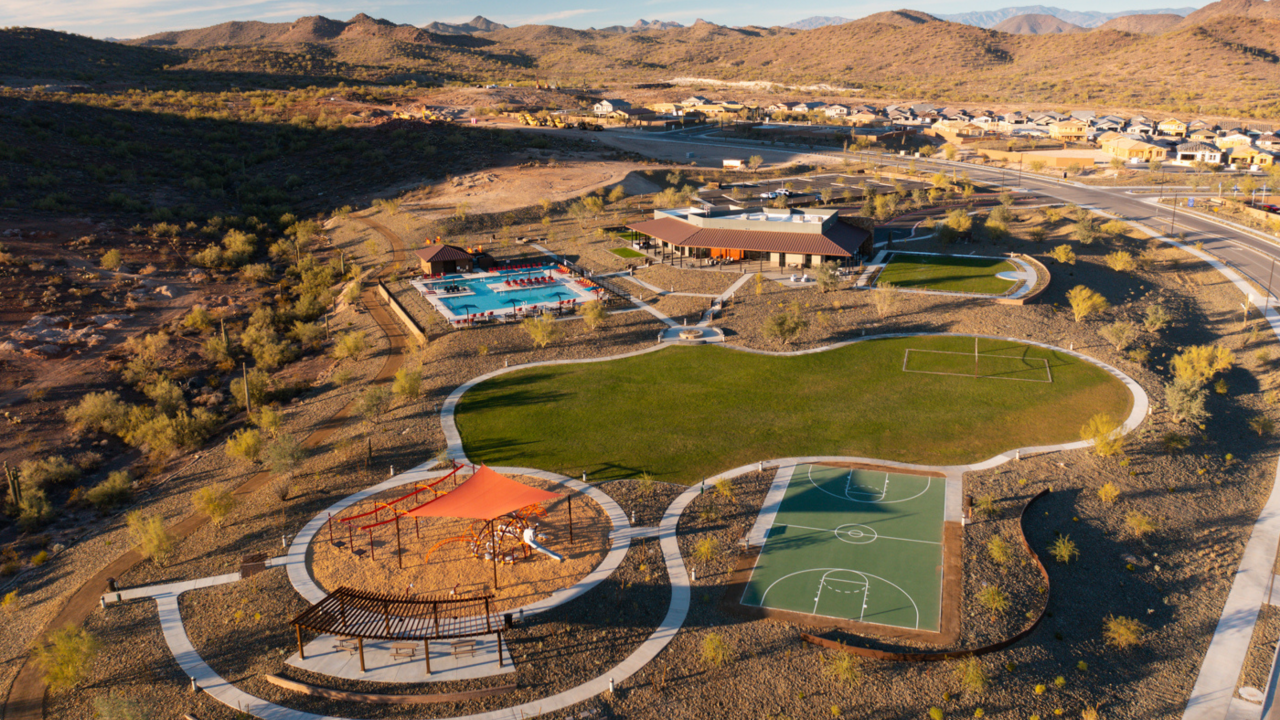
Northpointe at Vistancia in Peoria, Arizona, demonstrates how planning and landscape architecture can work together to create a community experience rooted in place.
Located within the award-winning Vistancia master planned community, Northpointe is a hillside village spread across 3,500 acres with access to approximately 1,100 acres of mountain preserve. The community was planned to support walkability, connection, and everyday interaction within the surrounding Sonoran Desert landscape.
The arrival experience is central to the identity of Northpointe. As residents and guests enter the community, they are lifted above the valley floor, creating an immediate sense of elevation, openness, and connection to the desert. Expansive views of the foothills and surrounding mountains take precedence over conventional suburban density, giving the entry sequence a spacious and grounded character.
This sense of place continues throughout the community. Washes, open spaces, hiking paths, and walking trails are woven directly into the neighborhood, allowing residential areas to transition naturally into the surrounding mountain preserve.
Edges between homes and undisturbed desert are treated with care through design guidelines and desert-appropriate materials. Native and Sonoran Desert-adapted planting carries the character of the preserve into front yards, streetscapes, and shared spaces, creating a cohesive visual language that feels authentic to the land.
Creating Communities That Feel Connected
Great communities are shaped by the relationships between people, places, and experiences.
Streets, parks, homes, trails, and gathering spaces should not be designed as separate elements. They should work together as part of a larger framework that supports movement, connection, identity, and everyday use.
For developers and builders, this kind of integrated planning creates long-term value. It helps establish a clear community vision, supports walkability, strengthens open space networks, and ensures that landscape architecture contributes to both function and character.
The Role of Landscape Architecture in Community Experience
Landscape architecture plays a critical role in how communities are experienced.
It shapes arrival, guides movement, defines transitions, frames views, supports outdoor living, and connects the built environment to the surrounding landscape. In places like the Sonoran Desert, it also helps ensure that design feels authentic to the region rather than imposed on it.
When landscape architecture is integrated with land planning, site planning, grading, open space strategy, and design guidelines, the result is a more complete and cohesive community experience.
Designing for Everyday Life
The best community planning is not only about what a place looks like. It is about how it feels and functions every day.
Can residents walk comfortably from home to a park?
Do trails and sidewalks connect naturally?
Does arrival communicate a clear sense of identity?
Are outdoor spaces visible, accessible, and useful?
Do transitions between neighborhoods, streets, and open spaces feel intentional?
These questions help turn planning and design into lived experience.
At ABLA, we help developers and builders align planning, landscape architecture, character, movement, and open space into clear community frameworks. From master planning and entitlement strategy to design guidelines, landscape architecture, signage, and construction services, our work is focused on creating places that feel connected, authentic, and built for everyday life.
Looking for a Planning and Landscape Architecture Partner?
ABLA works with developers, builders, and project teams to create master planned communities, multifamily communities, active adult communities, and mixed-use environments that are rooted in clarity, connectivity, and long-term performance.
Contact our team to discuss how thoughtful planning and landscape architecture can shape the experience of your next community.