
How Integrated Planning and Landscape Architecture Create Stronger Multifamily Communities
In multifamily community design, character is not created through one bold gesture or a single standout amenity. It is built through thoughtful planning, coordinated landscape architecture, and a clear understanding of how people will move through and experience a place every day.
When planning, landscape, architecture, circulation, and site conditions are aligned early, a community becomes easier to understand, more cohesive, and better equipped to perform over time. For developers, builders, and project teams, that early coordination can make the difference between a collection of individual features and a complete, connected environment.
Why Early Coordination Matters in Multifamily Design
Every successful multifamily project begins with a clear understanding of the land and the vision behind it.
Before design decisions take shape, the project team must ask:
What is the developer’s vision for the community?
What existing context, history, or identity should influence the design?
How should the community feel and function for residents day to day?
These questions establish more than a planning direction. They create the foundation for a design story that guides future decisions, from site organization and arrival sequences to shared amenities, pedestrian circulation, planting design, signage, and transitions between spaces.
Without that shared framework, individual design elements can feel disconnected. With it, each decision reinforces a larger sense of place.
Creating Clarity Through Site Planning and Landscape Architecture
Multifamily communities are complex environments. Residents, guests, service vehicles, amenities, open spaces, architecture, parking, and circulation systems all need to work together within one site.
Integrated planning helps organize that complexity.
A strong site framework considers:
Resident and visitor arrival
Pedestrian movement
Amenity placement
Shared outdoor spaces
Visual corridors
Entry sequences
Landscape character
Connections between architecture and open space
When these elements are coordinated early, the site becomes more intuitive. Residents understand where to go, how to move through the community, and how different spaces support different aspects of daily life.
This is where landscape architecture plays a central role. Landscape is not simply applied after the plan is complete. It helps shape the experience of the community, define hierarchy, soften transitions, support lifestyle, and reinforce the identity of the place.
Aligning Vision, Character, and Constraints
Strong multifamily design also depends on understanding the realities of the site.
Entitlements, zoning, design guidelines, governing documents, existing infrastructure, and development constraints all influence what is possible. Rather than treating these conditions as obstacles, an integrated planning process uses them to define opportunities.
When the project team understands both the vision and the constraints, they can identify where to preserve structure, where to refine the plan, and where to create additional value.
This alignment allows planning, landscape architecture, and architecture to work as one coordinated system from concept through construction.

Planning in Practice: Album Cooley Station
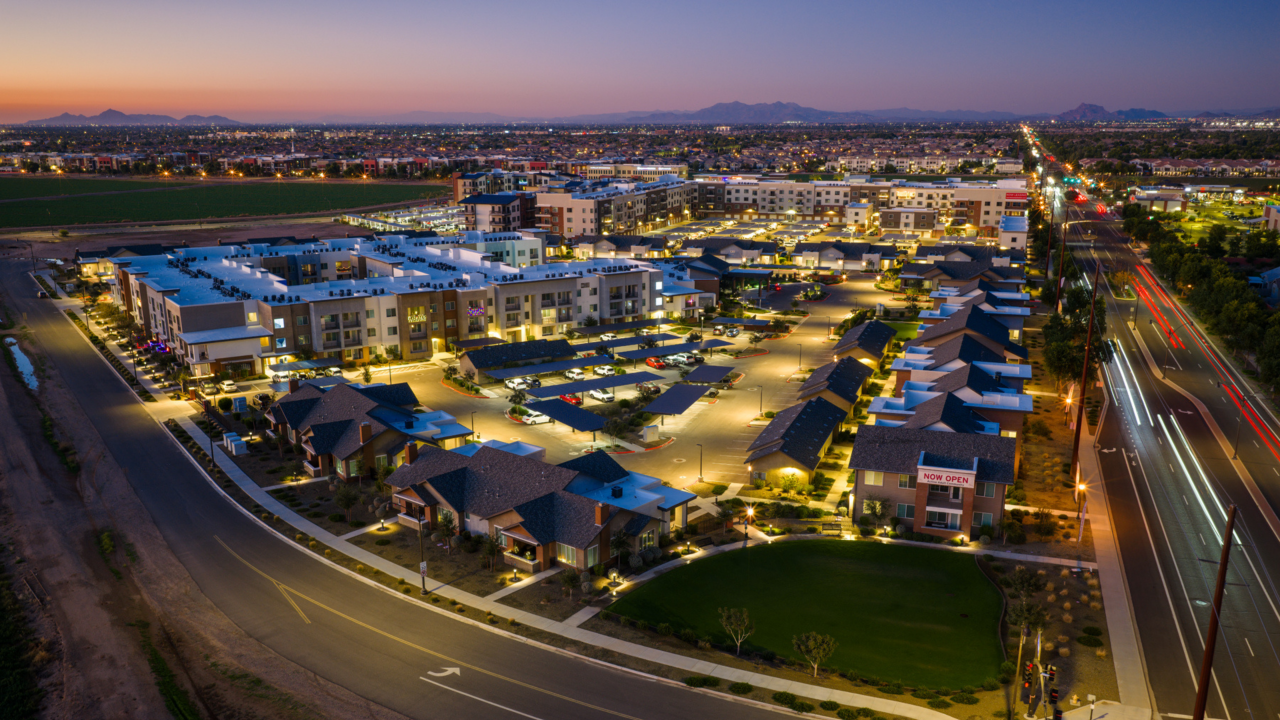
Album Cooley Station in Gilbert, Arizona, demonstrates how early coordination can support clarity, character, and long-term performance in a multifamily community.
Located within the larger Cooley Station master-planned community, Album Cooley Station was designed as an active adult community focused on connection, comfort, and lifestyle. The project builds on Cooley Station’s rail-inspired identity while creating an environment tailored to the needs of its residents.
Rather than relying on literal theming, the design uses landscape, architecture, signage, and circulation cues to create a clear arrival experience. From the first turn into the community, residents and visitors are guided through a defined entry sequence that signals transition, identity, and ease of movement.
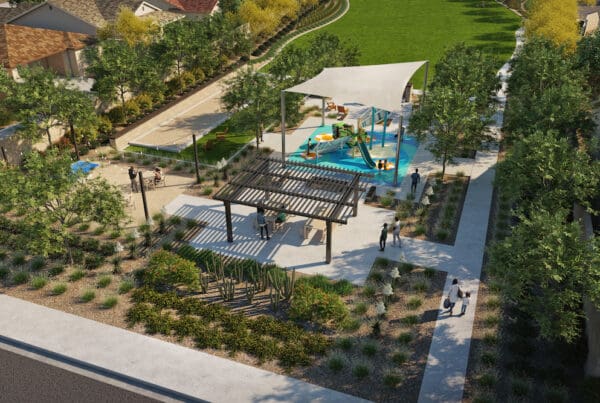
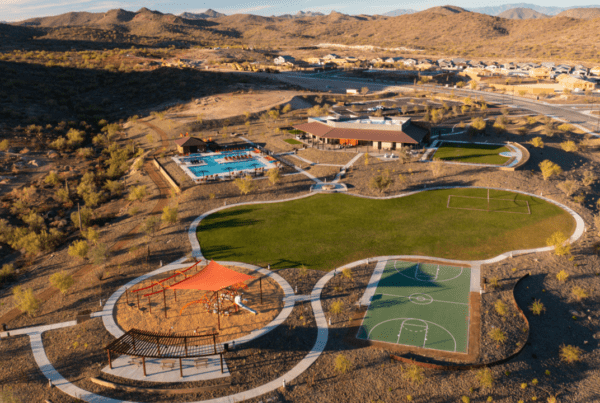
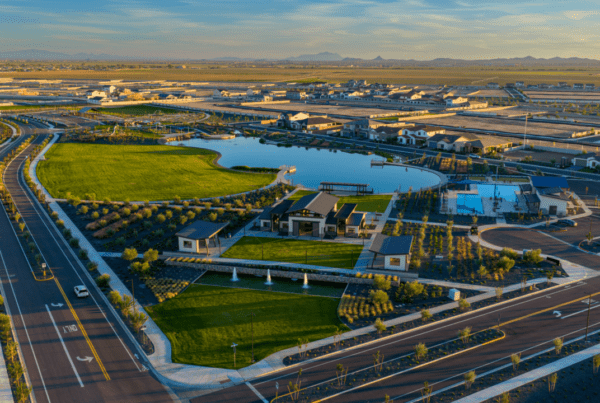
The site is organized around a series of courtyards and shared outdoor spaces. Some areas support active uses, including the pool and social gathering spaces. Others are quieter and more passive, offering residents places for everyday comfort, connection, and retreat.
Walkways, entries, landscape areas, and architectural relationships work together to guide movement across the site. Nothing is treated as an isolated feature. Each element supports the broader structure of the community and contributes to how residents experience the place.
Designing for Long-Term Community Performance
The most successful multifamily communities are not only visually cohesive. They function well over time.
That requires design decisions that support daily use, clear circulation, resident comfort, amenity access, maintenance considerations, and a lasting sense of identity.
When planning and landscape architecture are integrated early, the intent behind the project is more likely to carry through design review, construction, and occupancy. The result is a community that feels intentional from the beginning and continues to support residents over the long term.
The Value of an Integrated Design Framework
For developers and builders, early coordination creates clarity.
It helps align the project vision with site conditions, regulatory requirements, lifestyle goals, and design execution. It also creates continuity between the big-picture planning strategy and the details residents experience every day.
In multifamily environments, that continuity matters.
It is what connects arrival to identity, circulation to comfort, amenities to lifestyle, and landscape to long-term community value.
At ABLA, we help developers and builders organize planning, landscape architecture, character, and site conditions into a unified framework that carries from concept through construction. Through early collaboration and thoughtful design, multifamily communities can become clearer, more cohesive, and better positioned to serve the people who live there.
Looking for a Landscape Architecture Partner for Your Multifamily Community?
ABLA works with developers, builders, and project teams to create multifamily, active adult, and master-planned communities that are grounded in clarity, character, and long-term performance.
Contact our team to discuss how integrated planning and landscape architecture can support your next community.