
Planning for Everyday Nature
How changing buyer expectations are influencing trails, open space and outdoor gathering places in master-planned communities
The convenience of a digital world has changed how people live, work and spend their time. It has also made many people more intentional about finding opportunities to slow down, step outside and reconnect with the world around them.
A recent BUILDER article, “The Great Unplug: How New Communities Build in Digital Downtime,” explores how this shift is influencing what buyers want not only from their homes, but also from the communities they choose to live in.
Pools, fitness centers and clubhouses remain important. However, buyers are also placing greater value on outdoor environments that support a more natural rhythm of daily life. That may mean walking a shaded trail after dinner, gathering with neighbors on an event lawn or spending time outdoors without leaving the community.
Research continues to reinforce the value of these experiences. The American Heart Association has identified associations between greener living environments and cardiovascular benefits, while additional studies have connected greater natural diversity; including trees, plants, birds and water, with improved mental well-being.
Although the conversation around digital downtime may feel new, it reinforces principles that have long guided ABLA’s approach to master-planned community design.
Making Nature Part of Everyday Community Life
Trails, parks, gathering areas and preserved natural spaces are most successful when they are planned as part of the community’s overall framework rather than added later as individual amenities.
When nature is integrated through connected trail systems, shaded gathering places, neighborhood parks and preserved open space, it becomes part of how residents experience the community every day.
That proximity allows residents to step outside between meetings, take an evening walk, spend time with neighbors or enjoy a quiet moment outdoors without having to drive elsewhere.
For developers, a connected open space framework can also contribute to long-term community value by:
- Supporting walkability and pedestrian connectivity
- Strengthening placemaking and community identity
- Connecting homes with schools, amenities and neighborhood destinations
- Encouraging social interaction and outdoor activity
- Creating neighborhoods where people want to live over time
In many ways, the conversation around digital detox is really a conversation about community design. People are looking for places that support balance, movement and connection as part of everyday life.
The most successful master-planned communities respond by creating outdoor environments that are comfortable, accessible and deeply integrated into the identity of the place.
As Peter Dennehy notes in the BUILDER article, these environments are increasingly becoming a form of social infrastructure. From ABLA’s perspective, they are also an essential component of thoughtful planning and long-term community value, creating opportunities for residents to connect with nature and with one another as part of their daily routines.
Planning in Practice: Floreo Parks at Teravalis
Project: Floreo Parks at Teravalis
Location: Buckeye, Arizona
Park and Open Space Design: More than 85 acres
Village Size: 3,029 acres
Client: Howard Hughes Communities
Services: Site Planning, Entitlement Services, Design Guidelines, Design Review, Committee Services, Character and Theming, Landscape Architecture, Marketing Trail Visualization, Signage Master Planning, Cost Estimating and Budget Analysis, Grading Design, Project Management and Plant Procurement
As the first village within Howard Hughes Communities’ 37,000-acre Teravalis master-planned community, Floreo presented an opportunity to establish a distinct identity rooted in the landscapes, ecology and cultural character of Arizona’s West Valley.
Located between the White Tank Mountains and the Belmont Mountain Range and shaped by the natural systems of the Hassayampa River corridor, the village called for a planning approach that would celebrate the Sonoran Desert while creating meaningful connections among neighborhoods, parks, trails and community destinations.
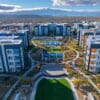
ABLA led the character development, placemaking concepts and landscape architecture for more than 85 acres of community and neighborhood parks. These spaces are supported by an integrated network of preserved open space and trails extending throughout the village.
The resulting framework places every resident within a 10-minute walk of a neighborhood park while connecting homes with schools, employment centers, commercial areas and community amenities through a cohesive pedestrian system.
Rather than treating parks as isolated destinations, ABLA used open space as organizing infrastructure—establishing a community framework where recreation, ecology and identity can evolve together over time.
Designing with the Sonoran Desert
The Sonoran Desert served as the foundation for Floreo’s character and planning framework.
ABLA developed a community narrative inspired by the pollinators that sustain desert ecosystems. The relationships among native bees, butterflies, hummingbirds and dragonflies were translated into a series of distinct but interconnected park experiences.
This approach created a common design language that reinforces environmental stewardship while encouraging recreation, learning and exploration.
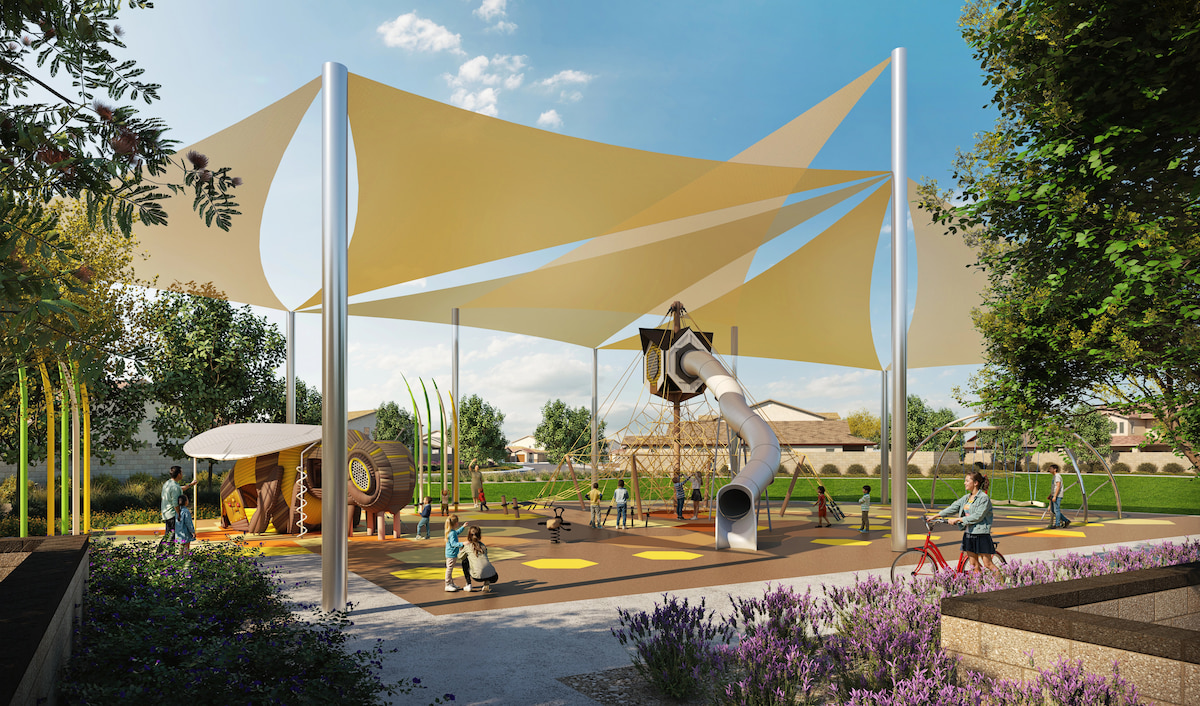
Interpretive elements, native planting palettes, habitat gardens, trail markers, shade structures and imaginative play environments extend the ecological story throughout the community. Residents encounter these themes in both subtle and interactive ways, from pollinator gardens and educational signage to play structures inspired by species found in the surrounding landscape.
Children may first discover these connections through a bee-inspired climbing structure or butterfly-themed play area. Along community trails, interpretive markers introduce native plant communities and habitat relationships. Neighborhood parks offer additional opportunities to observe bees, butterflies and hummingbirds interacting with landscapes designed to support them.
The result is a community identity that emerges directly from its environment and reflects the distinctive character of the Sonoran Desert.
A Connected Collection of Neighborhood Parks
Each Floreo neighborhood park interprets a different aspect of the desert ecosystem while contributing to a broader community narrative.
Floreo Park
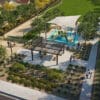
Floreo Park draws inspiration from native desert bees through honeycomb geometries, pollinator gardens and interconnected walking and biking trails. The design celebrates the essential role bees play in sustaining the region’s plant communities.
Bloom Park and Sunflower Park
Bloom Park and Sunflower Park honor native butterfly species through immersive play experiences and planting strategies designed to provide seasonal nectar sources throughout the year.
Windrose Park
Windrose Park pays tribute to Arizona’s hummingbirds, translating their nesting behaviors and flight patterns into sculptural gathering spaces and imaginative play environments.
Dahlia Park
Dahlia Park explores the movement and color of dragonflies through interactive elements designed to remain engaging during both daytime and evening use.
Poppy Park
Poppy Park takes inspiration from native wildflowers. Flowing pathways and nature-based play elements create an environment that encourages movement, discovery and exploration.
Indigo Park
Indigo Park emphasizes multigenerational recreation through expansive shaded lawns and flexible gathering spaces that support residents of different ages and abilities.
Each park maintains its own identity, but together they create a unified open space system that reinforces Floreo’s larger story and its relationship to the Sonoran Desert.
Open Space as Environmental Infrastructure
More than 600 acres of preserved open space, habitat corridors and trails maintain natural connections across the landscape while supporting biodiversity and recreational access.
Native and adaptive planting palettes, WaterSense principles and habitat preservation strategies help reduce water demand while reinforcing the environmental character of the community.
Dark Sky principles further strengthen Floreo’s environmental performance. Thoughtful lighting strategies help minimize light pollution within parks and open spaces, preserve views of the desert night sky and reduce potential impacts on wildlife and pollinator activity.
Together, these strategies demonstrate how environmental stewardship can become part of everyday community life rather than remain separate from it.

Planning with Structure, Designing with Intention
The first phase of Floreo illustrates how landscape architecture and open space planning can create communities with lasting identity, environmental resilience and meaningful connections to place.
By integrating character development, park planning, trail connectivity and landscape architecture from the earliest stages of the master plan, ABLA established a framework in which parks, preserved habitat and community amenities reinforce one another rather than function independently.
The result is a village where the Sonoran Desert is not simply preserved at the edge of the community. It is woven into the daily experiences of the people who call Floreo home.
Nature becomes part of the walk to the park, the route to school, an evening gathering with neighbors and the everyday experience of community life.